
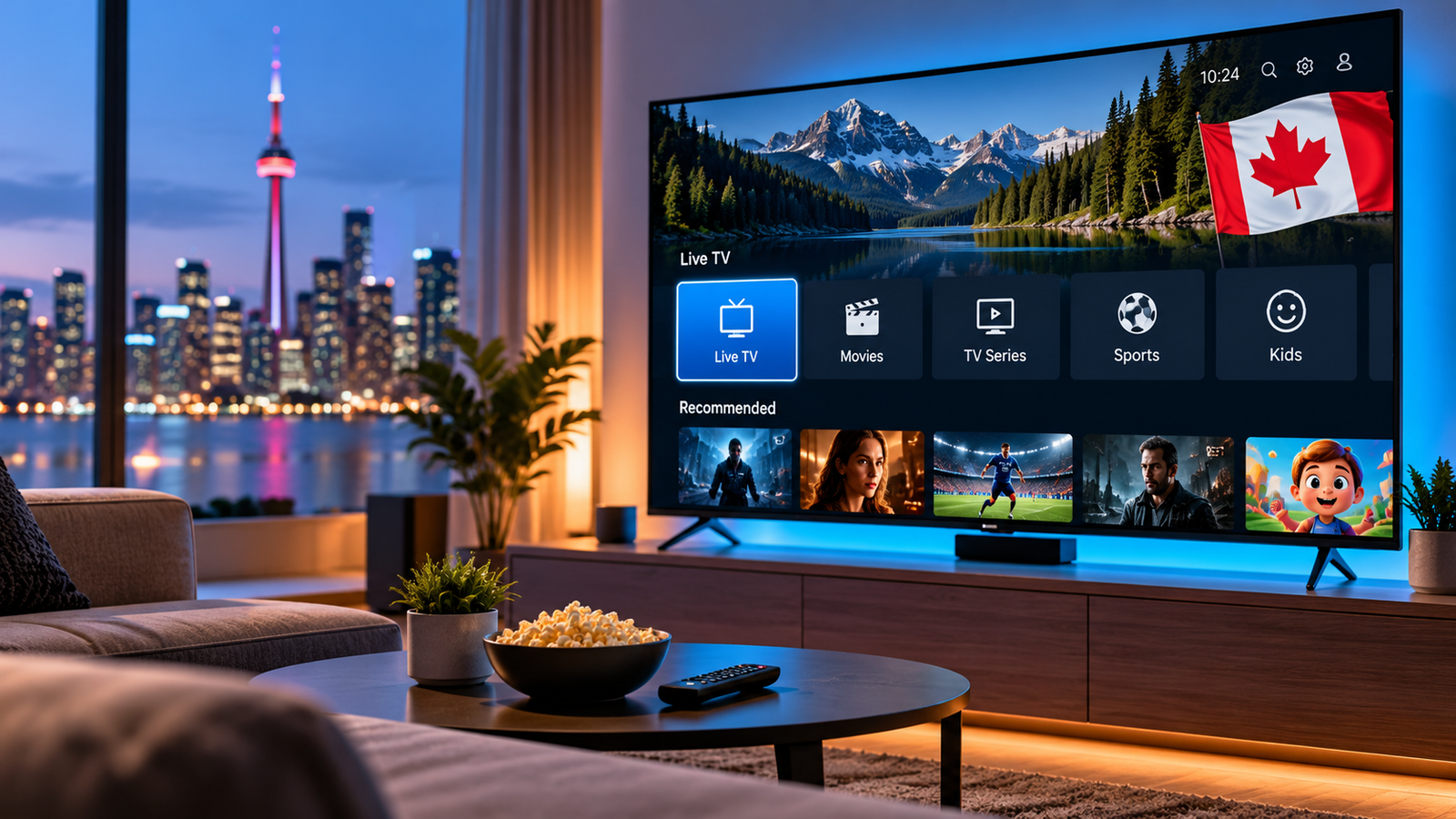
Television has evolved significantly in recent years, and more Canadians are exploring new ways to watch their favourite programs. From live television and sports to movies and TV series, internet-based streaming has made entertainment more flexible than ever.
One term you may have heard is IPTV. But what is IPTV in Canada, how does it work, and what should you know before choosing an IPTV service? In this guide, we explain everything in simple terms.
What Is IPTV?
IPTV stands for Internet Protocol Television. It is a technology that delivers television content through an internet connection rather than relying exclusively on traditional cable or satellite television.
Depending on the service, IPTV can provide access to live TV channels, movies, TV series, news, sports, documentaries, and other entertainment.
Unlike traditional television schedules, some IPTV platforms also offer video-on-demand (VOD), allowing viewers to select available movies and shows whenever they want.
IPTV is not a single application or device. It is a method of delivering content over an IP network, and the channels and features available depend on the provider.
How Does IPTV Work in Canada?
IPTV works by transmitting video and audio data over an internet network. When you select a channel or program, the compatible application or device receives the stream and displays it on your screen.
Getting started usually involves three main components:
- An internet connection: A reliable connection helps deliver video smoothly.
- A compatible device: This could be a Smart TV, streaming device, smartphone, tablet, or computer.
- An IPTV service or platform: The provider supplies access to the content it is authorized to distribute.
Once everything is configured, you can browse the available channels and select the content you want to watch.
The exact setup process depends on the service and the application you use.
Why Are Canadians Interested in IPTV?
Canadian viewers have different entertainment preferences. Some enjoy live sports, others prefer movies and television series, while many households want access to international programming.
IPTV can offer several useful advantages when the provider supports the features you need.
1. Flexible Entertainment
Some IPTV services combine live television with on-demand programming. This gives viewers more flexibility when choosing what to watch.
Instead of relying entirely on scheduled broadcasts, you may be able to select available movies and shows at a convenient time.
2. Multiple Device Options
Depending on the provider and supported application, IPTV can work on various devices, including:
- Samsung and LG Smart TVs
- Android TV and Google TV devices
- Amazon Fire TV and Fire TV Stick
- Android smartphones and tablets
- iPhones and iPads
- Windows and Mac computers
- Compatible streaming boxes
Before purchasing a subscription, confirm that the service supports your specific device and operating system.
3. Different Types of Content
IPTV platforms may offer a range of programming, including Canadian television, international channels, sports, entertainment, news, and on-demand libraries.
However, channel availability differs between services. Always check the channel list and confirm that the content you want is included in your chosen plan.
4. Convenient Access
Internet-based television can reduce the need for certain traditional television connections or dedicated cable equipment. Depending on the service, setup may involve installing a compatible application and entering your account details.
This can be convenient for people who prefer using existing internet-connected devices.
What Internet Speed Do You Need for IPTV?
Your internet connection has an important impact on streaming quality. If your connection is unstable or several devices are using the network simultaneously, you may experience buffering or reduced picture quality.
As a general starting point, consider these approximate speeds per stream:
| Streaming quality | Suggested internet speed |
|---|---|
| Standard Definition (SD) | 3–5 Mbps |
| High Definition (HD) | 5–10 Mbps |
| Full HD (1080p) | 10–15 Mbps |
| 4K Ultra HD | 25 Mbps or more |
These figures are general estimates, not guarantees. Actual requirements vary depending on video compression, the streaming platform, network congestion, and the number of simultaneous streams.
For a better experience, use a stable broadband connection. If possible, connect your television or streaming device through Ethernet or use a strong Wi-Fi signal.
Is IPTV Legal in Canada?
IPTV technology itself is not inherently illegal. The important question is whether the provider has the necessary rights and permissions to distribute the content it offers.
Legitimate television providers use internet-based delivery to distribute authorized programming. However, some services may offer copyrighted channels or premium content without permission.
Before choosing a provider, look for clear business information, transparent subscription terms, accessible customer support, and credible information about its content distribution rights.
Be cautious of services that make unrealistic promises, hide their business identity, or cannot explain whether they are authorized to offer their advertised content.
Choosing a legitimate provider helps you make a more informed decision and reduces the risk of paying for a service that may be unreliable or discontinued.
How to Choose an IPTV Service in Canada
Not every IPTV service offers the same experience. Before subscribing, compare the following factors.
Content availability: Review the channels, sports coverage, and on-demand content available in the plan.
Streaming stability: Look for clear information about service reliability and test the connection when a legitimate trial is available.
Device compatibility: Make sure the service works with your television, streaming device, or mobile device.
Pricing and terms: Check the total cost, subscription duration, renewal conditions, refund policy, and any additional connection fees.
Customer support: Choose a provider that explains its setup process and offers a clear way to request assistance.
Content authorization: Confirm that the service is authorized to distribute the channels and programs it advertises.
Comparing these details can help you find an option that suits your viewing habits and budget.
IPTV vs. Traditional Cable TV
Traditional cable television delivers programming through cable infrastructure, while IPTV delivers content over an IP network.
Both can provide live television, but their equipment requirements, channel packages, pricing, and additional features vary.
IPTV may offer greater flexibility with compatible devices and on-demand viewing. Traditional cable may be more convenient for households that prefer an established television package and provider-managed equipment.
The best choice depends on your location, internet connection, preferred channels, budget, and viewing habits.
Frequently Asked Questions About IPTV in Canada
Can I watch IPTV on my Smart TV?
Yes, many IPTV services support compatible Smart TVs. Check whether your television supports the provider’s recommended application or requires an external streaming device.
Do I need a special IPTV box?
Not always. Some services work through compatible Smart TV applications, while others may require a supported streaming device or set-top box.
Can IPTV work with Wi-Fi?
Yes. IPTV can work over Wi-Fi, provided your connection is stable enough for the selected video quality. Ethernet may provide a more consistent connection in some homes.
Can I watch live sports through IPTV?
Some providers offer sports channels and live events. Availability depends on the service’s package and content distribution rights, so check the details before subscribing.
Why does IPTV sometimes buffer?
Buffering can result from slow internet speeds, weak Wi-Fi, network congestion, device limitations, or problems with the streaming provider. Testing your connection and restarting your router or application may help identify the cause.
Final Thoughts
IPTV is an internet-based way to deliver television content, giving viewers another option alongside traditional cable and satellite services. Depending on the provider, it can combine live channels, on-demand entertainment, and support for multiple devices.
For Canadian viewers, the key is to choose a service that meets their entertainment needs, works reliably with their devices, offers transparent pricing, and has the appropriate rights to distribute its content.
At IPTV Canadians, our goal is to help readers understand internet television, explore compatible devices, and make informed streaming decisions. Explore our guides to learn more about IPTV technology and how to get started.